
2026 Composers
Texu Kim

Texu Kim
Texu Kim (b.1980) is “one of the most active and visible composers of his generation” (San Francisco Classical Voice), writing music that’s fun, sophisticated, and culturally connected.
Drawing on his personal affinity for humor, his background in science, and his fascination with everyday experiences, Kim’s work radiates positivity, offering “major-league cuteness” (Broadway World) while demonstrating “surprising scope.” (San Diego Story) As a Korean-American, Kim explores the localization of imported traditions, incorporating cross-cultural elements into his work in “impressive and special” ways so that “many orchestras and conductors around the world are taking an interest in [his] music.” (KPBS) By highlighting the interaction between folk culture and external influences, Kim creates meaningful depth while maintaining a signature playfulness and exuberance that is listener-friendly and engaging. Characterized by “exuberant, colorful washes of sound… punchy bass lines, snappy brass fanfares, and suave… solos” (San Diego Story), Kim’s music is at times “explosively virtuosic” (Wall Street Journal) but always uplifting and rewarding for both listeners and performers.
Kim’s work has enjoyed an impressive international performance history from a roster of top orchestras and ensembles, including the New York Philharmonic, the San Francisco Opera Orchestra, the San Francisco Symphony, the Minnesota Orchestra, the New World Symphony, the Oakland Symphony, the Oregon Symphony, the San Diego Symphony, the Detroit Symphony Orchestra, the National Orchestra of Korea, Seoul Philharmonic Orchestra, Gyeonggi Philharmonic Orchestra, Ensemble Intercontemporain, Ensemble Modern, Alarm Will Sound, Ensemble Reconsil Vienna, New York Classical Players, Ensemble 212, AsianArt Ensemble Berlin, Ensemble Mise-en, Fear No Music, Ensemble TIMF, Northwestern University New Music Ensemble, Indiana University New Music Ensemble, C4: Choral Composer/Conductor Collective, NOTUS, Red Clay Saxophone Quartet, the Verona Quartet, and more. Having served as the Composer-in-Residence of the Korean Symphony Orchestra (2014-18), Kim has appeared at Yeowoorak Festival, Walla Walla Chamber Music Festival, PyeongChang Music Festival and School, Bruckner Festival, SONiC Festival, Mizzou International Composers Festival, June in Buffalo, Aspen Music Festival, SCI National Conferences, Composers Conference, and Oregon Bach Festival. The Opening Ceremony of the 2014 Paralympic Winter Games and the Piece & Piano Festival featured Kim’s balanced and well-crafted arrangements, which may also be heard on numerous commercial albums. A frequent collaborator with choreographers, filmmakers, and educators, Kim has received awards and honors from the Barlow Prize, American Modern Ensemble, Copland House, SCI/ASCAP, Civitella Ranieri Foundation, and Isang Yun International Composition Prize, to name a few, in addition to winning a Silver Medal in the 1998 International Chemistry Olympiad (Melbourne, Australia).
Kim’s recent/upcoming projects include the world premiere of fffanfare!! commissioned by the San Francisco Opera in September 2022; performances of Dub-Sanjo by the Korean National Symphony Orchestra during their Europe tour in October 2022; the world premiere of Ritus Sanitatem by the Verona Quartet in March 2023, co-commissioned by Texas Performing Arts at the University of Texas at Austin with support of the Kahng Foundation and for the Smithsonian’s National Museum of Asian Art in honor of its 2023 centennial with support from the Bill and Mary Meyer Concert Series Endowment; the world premiere of Welcome Home!! by the San Diego Symphony (also a part of the California Festival) in November 2023; and Spirit Dance commissioned by the Barlow Endowment that will be premiered in 2024 by Alarm Will Sound, the London Sinfonietta, the Oakland Symphony, and The Saint Paul Chamber Orchestra.
An assistant professor of music at San Diego State University, Kim formerly taught at Syracuse University, Portland State University, and Lewis & Clark College. Kim is the Artist-of-the-Year of the Busan Philharmonic Orchestra and the director of the Korean Symphony Orchestra’s Composers’ Atelier program, educating and commissioning up-and-coming composers; he has also served as co-director of Ensemble 212’s ‘New Music for Young Audience’ series, and acted as a curator and board member for the Korean Cultural Society of Boston’s ‘New Music Symposium.’ Having earned his D.M. from Indiana University and prior degrees from Seoul National University, Kim’s greatest mentors include Unsuk Chin, David Dzubay, Sven-David Sandstrom, Claude Baker, and Sangjick Jun.
Polina Nazaykinskaya
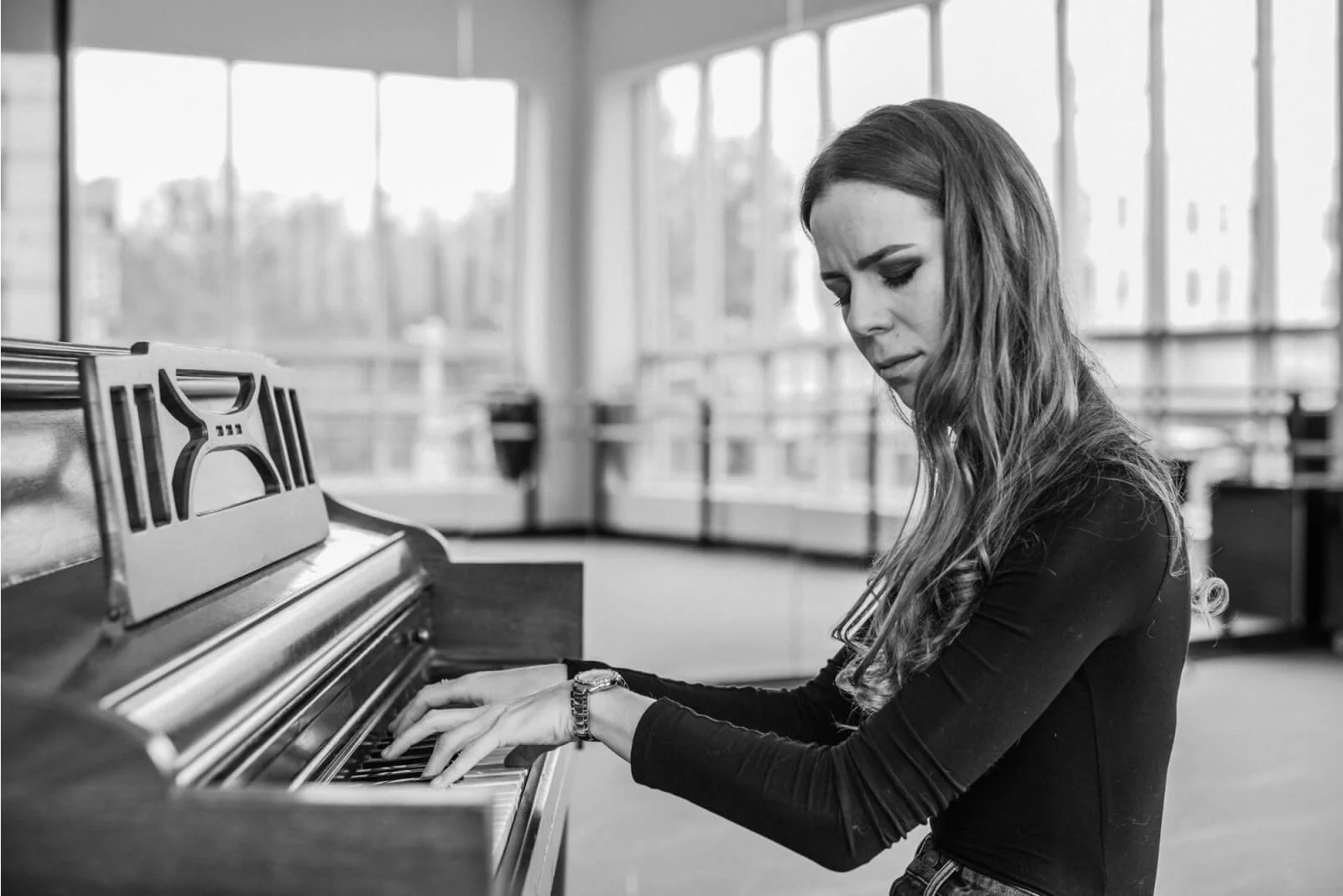
POLINA NAZAYKINSKAYA
The music of award-winning composer Polina Nazaykinskaya is performed widely across the United States and Europe, celebrated for its emotional depth, lyrical power, and vibrant orchestral colors. Her symphonic poem Winter Bells remains in constant demand, performed by the Minnesota Orchestra, the Atlanta Symphony Orchestra, and the Utah Symphony, among others.
Highlights of the 2025–2026 season include performances of Elegy XXII with the Orchestre Philharmonique de Strasbourg and the Waco Symphony, alongside the Canadian premiere of Reading the Wind with the Winnipeg Symphony. Her orchestral works will also appear with the Glacier Symphony (Fenix) and the Camerata di Sant’Antonio (Symphony for Strings), and the Oregon Ballet Theatre will create a new ballet based on Symphony for Strings. Two world premieres anchor the season: a violin–piano work for Wendy Sharp at Yale University and a piano solo piece for Ingrid Keller on the Belvedere Series.
Looking ahead, Nazaykinskaya is developing a new tone poem for cello and string orchestra commissioned by Julie Sevilla-Fraysse and the Orchestre de la Garde républicaine, a violin concerto for Igor Pikaizen, and a chamber work for The Merian Ensemble. Her music will also be performed by the Maryland Classic Youth Orchestras, reflecting her commitment to engaging the next generation of musicians. In recent seasons, Nazaykinskaya premiered three ballets — The Rising, Emily, and Trees — with the San Francisco Ballet and MorDance in New York City.
Her collaborators include internationally recognized choreographers Pascal Rioult, Yuri Possokhov, Jonah Bokaer, Morgan McEwen, and Ulyana Bochernikova; conductors such as Osmo Vänskä, Teodor Currentzis, Aziz Shokhakimov, Sarah Hicks, Lawrence Loh, Hannu Lintu, and David Hattner; and soloists including trombonist R. Douglas Wright, violinist Elena Korzhenevich, pianist Anton Nel, and cellist Julie Sevilla-Fraysse.
Between 2021 and 2024, Nazaykinskaya served as Philharmonic Orchestra Conductor of the Greater Connecticut Youth Orchestras. She has also led the British Youth Music Theatre, RIOULT Dance NY, and the University of Southern Mississippi Orchestra. In addition to her work as a composer and conductor, she is a Lecturer of Composition at Brooklyn College Conservatory (CUNY) and a Teaching Artist at the Educational Center for the Arts in New Haven.
She is a Doctor of Musical Arts (DMA, ABD) in Composition from the CUNY Graduate Center, where her principal mentor was Tania León. She earned both a Master of Music and an Artist Diploma at the Yale School of Music, studying with Christopher Theofanidis. At the Moscow Tchaikovsky Conservatory, she studied composition with Konstantin Batashov and violin with Vladimir Ivanov, receiving her Bachelor of Music degree.
Juri Seo
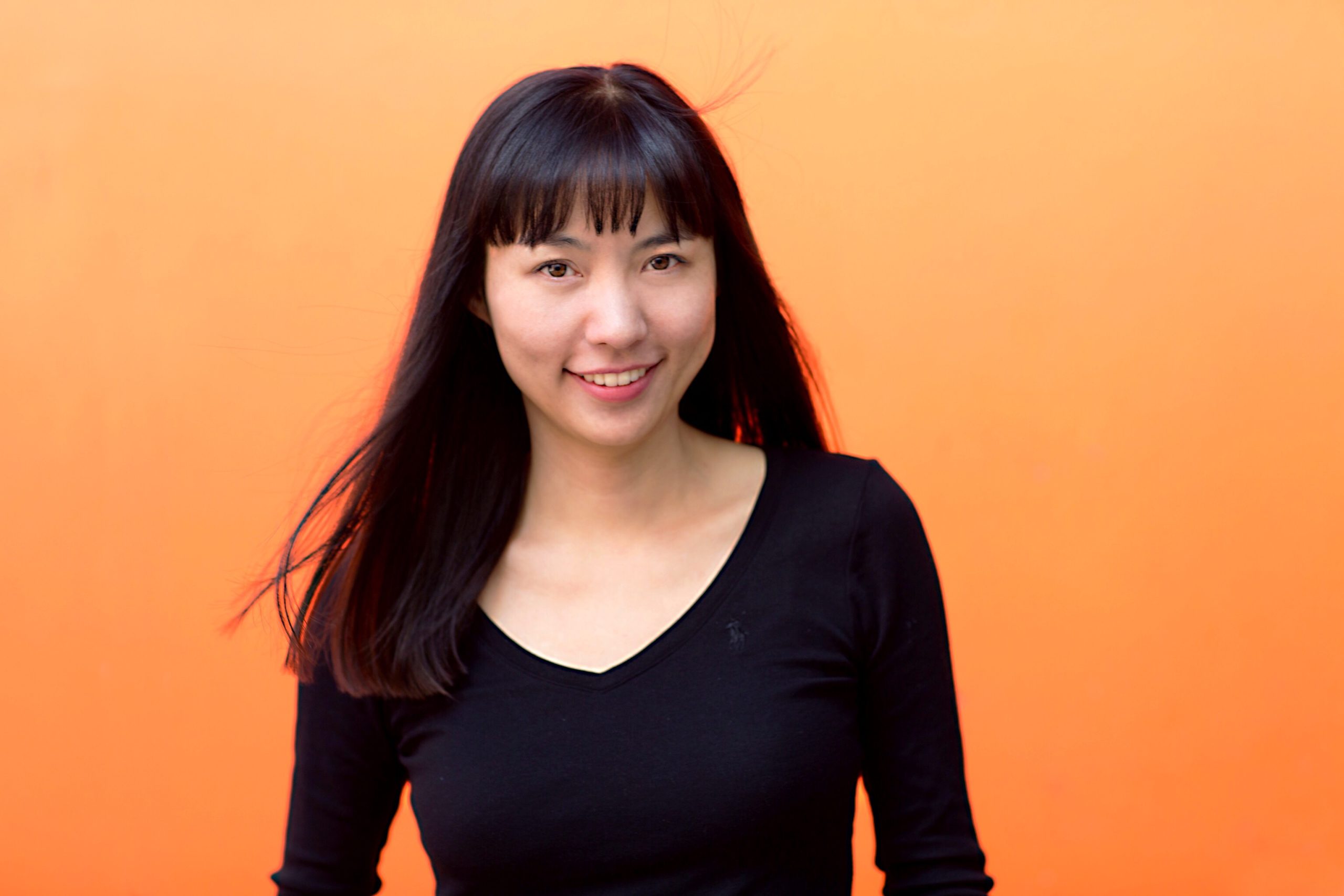
Juri Seo
Juri Seo* (b. 1981) is a Korean-American composer and pianist based in Princeton, New Jersey. She seeks to write music that encompasses extreme contrast through compositions that are unified and fluid, yet complex.
She merges many of the fascinating aspects of music from the past century—in particular its expanded timbral palette and unorthodox approach to structure—with a deep love of functional tonality, counterpoint, and classical form. With its fast-changing tempi and dynamics, her music explores the serious and the humorous, the lyrical and the violent, the tranquil and the obsessive. She hopes to create music that loves, that makes a positive change in the world—however small—through the people who are willing to listen.
Her composition honors include a Guggenheim Fellowship, a Koussevitzky Commission from the Library of Congress, a Goddard Lieberson Fellowship and the Andrew Imbrie Award from the American Academy of Arts and Letters, the Kate Neal Kinley Memorial Fellowship, the Ilshin Composer Prize, and the Otto Eckstein Fellowship from Tanglewood. She has received commissions from prominent organizations including the Fromm Foundation, the Barlow Endowment, the Folger Shakespeare Library, the Goethe Institut, and Tanglewood. She has released four portrait albums: Obsolete Music with the New Amsterdam Records, Toy Store with Carrier Records, and Mostly Piano and Respiri with Innova Recordings. She holds a D.M.A. (Dissertation: Jonathan Harvey’s String Quartets, 2013) from the University of Illinois at Urbana-Champaign where she studied with Reynold Tharp. She has also attended the Accademia Nazionale di Santa Cecilia (Rome, one year of corsi di perfezionamento with Ivan Fedele). She is Professor of Music at Princeton University.
Juri lives in Lawrenceville, just outside of Princeton, with her husband, percussionist Mark Eichenberger and a little mutt named Roman. For more information, visit www.juriseomusic.com.
*Note on pronunciation: In North America, her name is pronounced [Jew-ri Suh].
Daniel Wohl
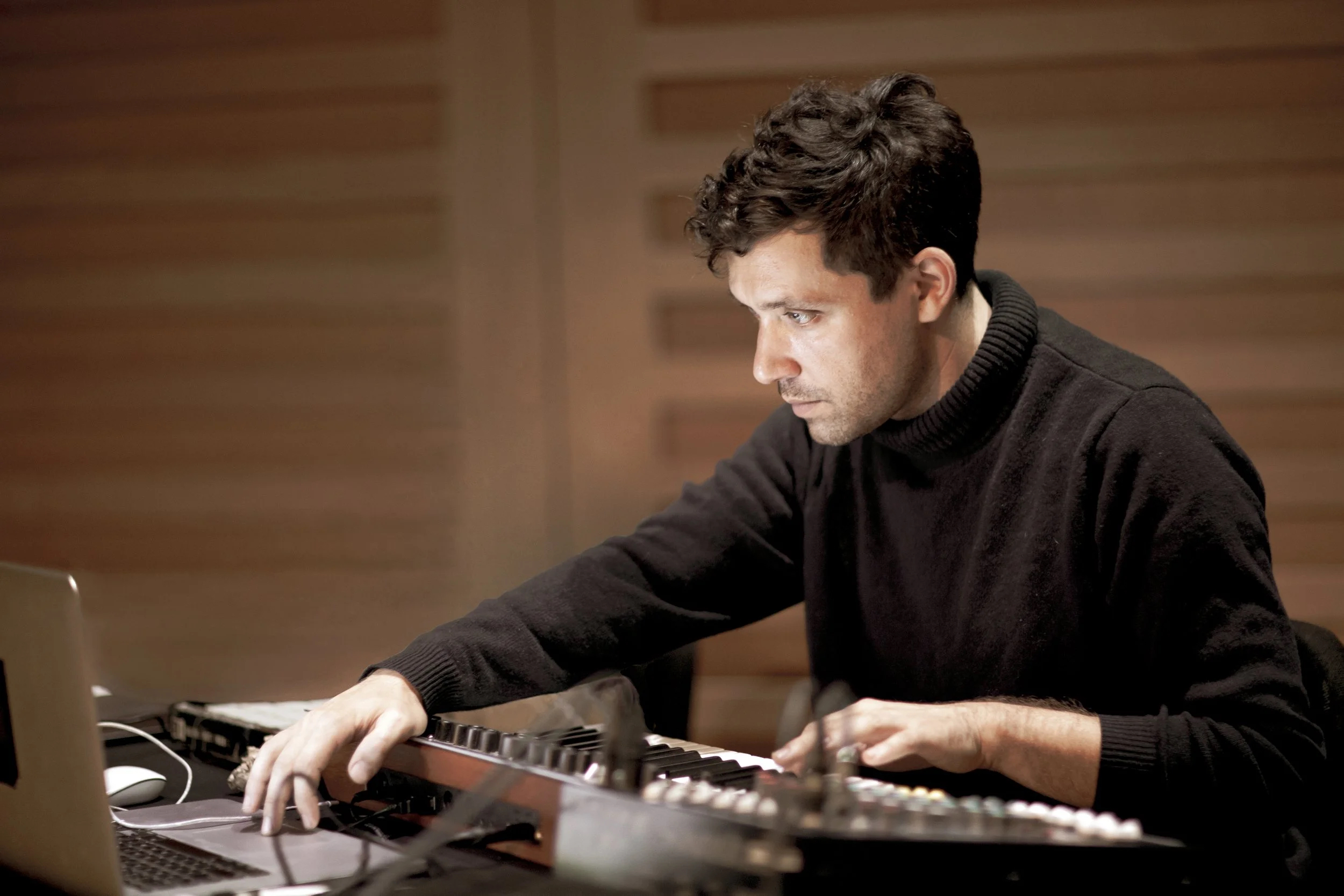
Daniel Wohl
Born in Paris and now residing in Los Angeles, Daniel Wohl is an award winning composer who blends electronics with acoustic instrumentation to often “surprising and provocative effect” (NPR).
His multifaceted output ranges from intimate music for soloists to immersive electronic pieces, music for film and television, chamber ensembles, and works for large orchestra. He has received critical praise as one of his generation’s “imaginative, skillful creators” (New York Times) making music that is “beautiful…original” (Pitchfork).
Performances of his electroacoustic concert music have been held at the Broad Museum, The Brooklyn Academy of Music, MASS MoCA, the Hollywood Bowl, Carnegie Hall, The Barbican, Elb Philharmonie, Sadler’s Wells, and MoMA PS1, by orchestras such as the Cincinnati Symphony, the Los Angeles Philharmonic, Alarm Will Sound, The London Contemporary Orchestra, ensembles from the San Francisco Symphony and the Chicago Symphony Orchestra, the Bang on a Can All-Stars, and So Percussion among others. As a collaborator, Daniel has worked on projects with artists such as Jóhann Jóhannsson, David Lang, Son Lux, and Arooj Aftab. In 2023 he composed the music for the Luna Luna exhibit, a showcase of the world’s first art amusement park which was named the “art event of the year” (Independent), and featured artworks by Jean-Michel Basquiat, Keith Haring, Dali, David Hockney.
His passion for composing for visual media has led to collaborations on films, documentaries and television shows, with directors like Josephine Decker and Morgan Neville. Notable scores include Shangri-La, the Grammy-nominated docuseries on Rick Rubin, as well as HBO’s Search Party.
Among upcoming projects is a residency with the Radio Philharmonic Orchestra in Amsterdam for the 2025–26 season, which will feature the premiere of a new piano concerto written for Francesco Tristano. He is also developing new electroacoustic works for The London Contemporary Orchestra and the Ragazze Quartet, as well as a new piece for Hub New Music, supported by the Tanglewood Learning Institute, the Peabody Essex Museum, and the I-Park Foundation.
His most recent album Etat was released on Nonesuch and New Amsterdam Records in 2019. A graduate of the doctoral program at the Yale School of Music, Daniel studied primarily with composer David Lang.